“Grateful to Dr. Mitri Raheb, Dar al-Kalima University, and CAFCAW for inviting me to join the roundtable in Hannover-Germany on the role of religion and the arts in building community resilience. In a region where crises overlap and grief keeps returning, this conversation felt urgently necessary: faith as an ethic of steadfast care; art as oxygen, giving chaos a form we can hold; solidarity as daily practice, not slogan.
Thank you for creating a space where artists, scholars, and cultural workers could speak frankly, share tools, and imagine actionable paths across borders, disciplines, and communities. We leave with renewed courage, and with simple commitments that matter: keep the doors open, keep the dialogue alive, and keep making.
“Threads of Faith, Colors of Art: Weaving Resilience in Times of Crisis in Lebanon“, by Dr. Pamela Chrabieh, October 18, 2025, in Roundtable Discussion on the Role of Religion and the Arts in Promoting Community Resilience in Contexts of Compounded Crises| Oct 16 to 19, 2019 – Hanover, Germany / Dar al-Kalima University-CAFCAW
If you would like to see how these threads come together on the ground, our hybrid collective exhibition “Aftermaths” is on view at Kulturnest (Lebanon) and online until November 27, 2025.”
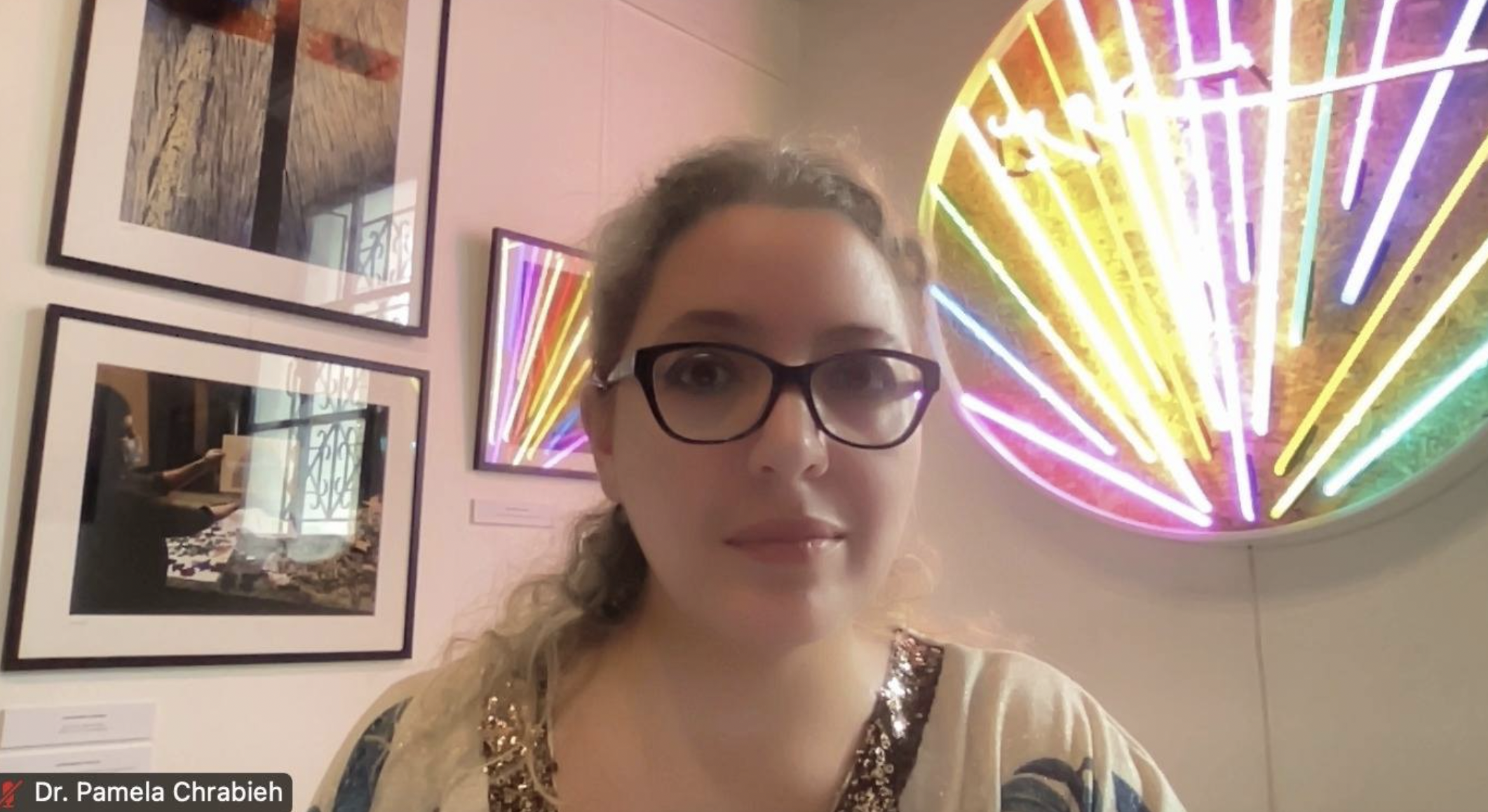

DR. PAMELA CHRABIEH SPEECH SUMMARY:
Speaking from Kulturnest in Lebanon amid ongoing war and economic collapse, Dr. Chrabieh argues that two threads keep society from tearing: faith (as an ethic of steadfast care and responsibility, beyond mere feeling) and art (not a luxury but “oxygen” that steadies, gathers, and gives form to chaos). Kulturnest embodies this through hybrid exhibitions, markets, readings, and workshops—often continuing under blackout and bombardment—while enabling affordable editions, community rituals, and diasporic support. Across Lebanon, despite a weak market, artistic activity flourishes through pop-ups, shared costs, open studios, residencies, and women-led micro-infrastructures that carry community when the economy cannot. This, she says, is resilience: making meaning when it breaks, repairing ties, and beginning again. She calls for treating culture as infrastructure (light, stabilizing partnerships; basic legal protection; practical incentives), and proposes immediate, grassroots tools: diaspora patron circles, edition strategies, shared logistics and co-op shipping, stronger hybrid presence, and formalized solidarity (time-banking, gear co-insurance, shared fabrication corners, rotating mentorship). The closing note: keep multiplying small faithful acts—faith and art in the same room—so truth can be told, justice pursued, and a future imagined.
 Dr. Pamela Chrabieh
Leave a comment